Saturday, October 6, 2007

Santo Pecora And His Dixie Land Jazz Band - Mercury Records

Santo Pecora And His Dixie Land Jazz Band
featuring Pete Fountain


1950 - Mercury Jazz Series C-419

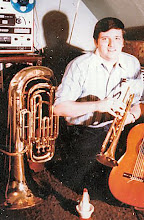
Santo Pecora Photo

Side A
1. Listen (Ferber)

Side B
1. Mahogany Hall Stomp (Williams)


Liner Notes:

One of the earliest Pete Fountain recordings. No cover on this one, just the 78 rpm record.

Personnel:
George Girard, trumpet

Santo Pecora, trombone
Pete Fountain, clarinet
Armand Hug, piano
John Sinac, bass
Santo Pecora, drums

Recorded in New Orleans, LA, June 1950. Both sides are also available on Mercury MG C-123

Allegiance Extra Pete Fountain / Al Hirt - Allegiance Records

Allegiance Extra Pete Fountain / Al Hirt


1987 Allegiance Records CDP-72923


CD Listing:

Pete Fountain "Fountain Of Youth"
1. Up A Lazy River 3:08
2. Mahogany Hall Stomp 4:07
3. Sunset In Paradise 2:31
4. The World Is Waiting For The Sunrise 4:46
5. I'm Going Home 3:15
6. Farewell Blues 3:08
7. That's A-Plenty 2:51
8. High Society 3:15
9. In The Shade Of The Old Apple Tree 3:27
10. Bayou Blues 3:58

Al Hirt "Blues Line"
11. Faded Love 2:31
12. Lonesome Street 2:32
13. Orange Blossom Special 2:22
14. Louisiana Man 2:35
15. Oh Lonesome Me 1:55
16. Break My Mind 2:55
17. I Walk The Line 2:20
18. When My Blue Moon Turns To Gold 2:06
19. I Really Don't Want To Know 2:46
20. Blue Eyes Crying In The Rain 2:44
21. I'm So Lonesome I Could Cry 3:00

Liner Notes:

Illustration: Terry Robinson
Design: Tommy Steele

Compact Disc Credits
Digitally Remixed And Mastered At: Dave Pell Digital By Michael Boshears
Art Director: Dee Westlund
Design: Murry Whiteman
Cover: Tommy Steele
Format compact disc.

Allegiance Extra Pete Fountain: Fountain of Youth / Al Hirt: Blue Line

This is a CD that has two original vinyl records, one by Pete Fountain and the other by Al Hirt. Not much information is included on the enclosed artwork. Allegiance is a small record label in California, they have many releases from John Denver to Mary Wells.

This CD is out-of-print and hard to find at a reasonable price. It is listed these days for $50 - $100 if you can find it. There is nothing rare about the music, it's on a number of CDs and you can still find the individual vinyl LPs if you look hard enough.

Pete Fountain and Al Hirt: New Orleans Jazz - GHB Records

Pete Fountain and Al Hirt: New Orleans Jazz


Booklet Below - Notice the two handsome musicians!


2003 GHB Records BCD-115

CD Track Listing:
Pete Fountain's Dixieland All Stars
1. Farewell Blues
2. Jazz Me Blues
3. March Of The Bobcats
4. At The Jazz Band Ball

Al Hirt, trumpet
Pete Fountain, clarinet
Eddie Miller, tenor sax
Abe Lincoln, trombone
Stan Wrightsman, piano
Morty Corb, string bass
Ray Bauduc, drums
Recd: Los Angeles, October 1, 1956

Pete Fountain And His Three Coins
5. Cherry
6. Song Of The Wanderer
7. Home
8. Struttin' With Some Barbecue

Pete Fountain, clarinet & tenor sax
Roy Zimmerman, piano
Phil Darios, string bass
Johnny Edwards, drums
Recd: New Orleans, December 9, 1954

Al Hirt And His New Orleans Jazz Band
9. After You've Gone
10. Over The Waves
11. While We Danced At The Mardi Gras
12. Breeze
13. Toot Toot Toosie Goodbye
14. Careless Love
15. It's A Sin To Tell A Lie
16. Floatin' Down To Cotton Town

Al Hirt, trumpet
Harry Shields, clarinet
Bob Havens, trombone
Roy Zimmerman, piano
Joe Capraro, drums
Phil Darios, string bass
Paul Edwards, drums
Lil Pickens, vocal
Bobby Castigliola, trombone
Rita St. Claire, vocal
Recd: New Orleans, December 29, 1955

Liner Notes:

Pete Fountain and Al Hirt

THE MEN

Despite playing together often, and between them representing the essence of old style New Orleans music to middle America for over a decade, Pete Fountain and Al Hirt only recorded together twice - both times in California!

The first four tracks on this CD were made during a trip the two of them made to the Dixieland Jubilee, and our cover picture was taken on stage during the event.

The titular leader, Peter Dewey Fountain, was born in New Orleans on July 3rd, 1930. He started playing clarinet as a child on doctor's advice, because of respiratory problems. The year after this session, he began a three year stint with The Lawrence Welk Orchestra, before opening his own club in New Orleans in 1959. His clarinet sound is limpid and pure, somewhat reminiscent of Irving Fazola.

Alois Maxwell Hirt, born in New Orleans on November 7th, 1922, spent much of his early career on the road with both Tommy and Jimmy Dorsey, before returning to his home town in the late 1940s. From the mid fifties, he seems only to have played Dixieland music. Curiously, he told Downbeat magazine in 1964 that he didn't consider himself a jazz player. His playing demonstrates the complete instrumental control you'd expect from a musician with such extensive early big band experience.

Ray Bauduc, born in New Orleans on June 18th, 1906, is most famous for having held down the drum chair with the hugely successful Bob Crosby Bobcats from 1935 until 1942. He acknowledged the influence of the Crescent City's great black drummers, particularly Baby Dodds.

Another former Bobcat, Edward Raymond Miller, born in New Orleans June, 23rd, 1911, played tenor and clarinet, although he's heard only on saxophone here. For my taste, he supplies many of the best musical moments on the session.

Morty Corb, the bass player, was a Los Angeles session musician. Jazz fans remember him for a session he recorded with the later Kid Ory band, on which he played a bowed solo on "Blues for Jimmy," based on the sextet from the opera "Lucia." Apparently the regular bass player, Ed "Montudi" Garland, had demanded more money, so Ory sent for Corb.

Another L.A. session musician was trombonist Abe Lincoln. Abe appeared on a recording in a band led by Bobby Hackett, featuring two trombones - the other one was Jack Teagarden! George Buck described him as a "monster on the trombone," and I couldn't improve on that.

Harry Shields, born in New Orleans on June 30th, 1899, was of course the brother of the now famous Larry Shields, clarinetist with Original Dixieland Jazz Band. Harry played clarinet with Johnny Wiggs, Sharkey Bonano, and Tom Brown.

During later years, he often appeared at Preservation Hall, sometimes deputizing for George Lewis.

Pianist Roy Zimmerman played on several recordings for Joe Mares' Southland label, and is featured on twelve of the sixteen tracks. Never less than good, he sounds most at ease in the relatively intimate surroundings of the quartet tracks, where he occasionally reveals flashes of the influence of Teddy Wilson.

Bob Havens, the trombonist, was born in Quincy, Illinois, on May 3rd, 1930. Apparently, he passed through New Orleans with a touring band, liked the place, and decided to stay.

THE MUSIC

No surprises in the repertoire department - all of the tunes on this CD are familiar Dixieland favorites, with the exception of "Floatin' Down To Cotton Town." On the Dixieland All Stars session "Farewell Blues" had been recorded in the twenties by both the New Orleans Rhythm Kings and King Olivers' Dixie Syncopators. This version, starting with a lip busting intro by Abe Lincoln, goes on to feature a surprisingly gentle exchange between Al Hirt playing with Harmon mute, and Eddie Miller. "Jazz Me Blues" and "At the Jazz Band Ball" are mainly associated with the great lyrical cornetist, Bix Beiderbecke, and "March of the Bobcats" (actually the last strain of "Maryland My Maryland") was featured by the Bob Crosby aggregation, so Ray Bauduc and Eddie Miller must have felt right at home. The music on these four tracks is pretty much "in your face" but very well played and executed, and existing.

The four tracks by Pete Fountain on his Three Coins offer a complete contrast. Three of the four are at relaxed medium tempos,and Pete Fountain does "Song of the Wanderer" on tenor saxophone, with surprisingly muscular phrasing; I wish he's done more on saxophone. Roy Zimmerman contributes some nice moments.

With the session under Al Hirt's leadership, we're back in flag waving country, but here are a lot of musical moments. Overall, the band seems to have had the routine of playing a quiet "down" chorus before the out chorus, rather often the fashion of the Kid Ory band. Notice how Hid uses the four bar breaks at the end of his "After You've Gone" solo to modulate from Bb to Eb for the vocal, and how Harry Shields uses his four bar break to modulate back again.

The modulations for the vocals are similarly seamless on several other tracks. "Over the Waves" features a tasteful duet by Al Hirt, again on Harmon mute, and the straight muted Bob Havens. "Careless Love" (my favorite track) is very restrained, goes through several key changes, and has a tasteful guitar solo by Joe Capraro. But every listener will find his (or her) own favorite things to enjoy!

- Mick Burns

Friday, October 5, 2007

Pete Fountain Presents the Best of Dixieland: Various Artists - Verve Records

Pete Fountain Presents the Best of Dixieland: Various Artists


Booklet Below


2001 Verve Records 314549364-2

CD Listing:
1. Basin Street Blues
Kenny Davern with The Dixie Rebels
2. My Inspiration
Irving Fazola
with Bob Crosby and His Orchestra
3. Dogtown Blues
Matty Matlock
with Bob Crosby and His Orchestra
4. Perdido Street Blues
Sidney Bechet
with Louis Armstrong
5. Take My Hand Precious Lord
George Lewis
6. Wild Man Blues
Johnny Dodds's
Black Bottom Stompers
7. Love Is Just Around the Corner
Pee Wee Russell
with Eddie Condon and His Windy City Seven
8. Memories of You
Eddie Miller
with Pete Fountain and His Band
9. Dame Blanche
Bob Wilber
with Jack Teagarden
10. Sweet Lorraine
Jimmie Noone's
Apex Club Orchestra
11. Show Piece
Edmond Hall
and His Quartet with Teddy Wilson
12. Beau Koo Jack
Omer Simeon
13. Meet Me in Chicago
Jack Maheu
with the Art Hodes Orchestra
and the Jimmy McPartland Orchestra
14. Rose Room
Albert Nicholas
15. Body and Soul
Barney Bigard
with Louis Armstrong and the All-Stars

Produced by Ernest Anderson and Milt Gabler, Joachim E. Berendt,
Norman Granz, Creed Taylor, Jack Tracy, and others

"When they asked me to put together a compilation of traditional New Orleans jazz, I immediately thought of my fellow clarinet players," says Pete Fountain. "The clarinet has the distinction of being the hardest of all horns to play and probably the most neglected of all instruments."

Fountain is easily the most celebrated clarinet player since the Swing Era, and this unique collection gives him, in turn, a chance to celebrate his heroes and his peers, the great "stick" players of New Orleans and traditional jazz. Personally selected and annotated by Fountain himself, this set covers the entire history of the instrument in classic jazz, from founding fathers like Sidney Bechet and Johnny Dodds to Swing Era masters lie Pee Wee Russell and Irving Fazola to contemporary giants like Bob Wilber and Kenny Davern.

Liner Notes:

When they asked me to put together a compilation of my favorite recorded examples of traditional New Orleans jazz, I immediately thought of my fellow clarinet players. In my opinion, the clarinet has the distinction of being the hardest of all horns to play and probably the most neglected of all instruments. It flourished in the early days of New Orleans jazz and in the Swing Era, but has been largely forgotten ever since, perhaps because it is such a demanding instrument. Therefore I put together this compilation to help all the clarinet players get a break!

Incidentally, I do not regard myself as being overlooked, since I got a lot of wonderful lucky breaks over the years. This time it's all the other clarinetists that I want to put in the spotlight.

My first hero, of course, was Benny Goodman. I don't think anybody came to the clarinet from the Thirties onward without being directly inspired by Benny. When I heard that sound, I was hooked on the instrument. It might sound odd because I was born and raised in New Orleans, which is ground zero for jazz clarinetists. But Benny himself, as I later found out. was originally motivated to play clarinet by the great New Orleans masters: Jimmie Noone, Johnny Dodds. Sidney Bechet. Along with George Lewis, Irving Fazola, Edmond Hall. Barney Bigard, and Albert Nicholas, these guys are the gold standard of jazz clarinet. So it isn't surprising, really, that it took a Chicagoan to lead me back to my hometown style.

My second hero was Irving Fazola (originally known as Irving Prestopnick). who became a star with Bob Crosby's orchestra and whom we all called Faz. For years I tried to get a "fat" sound just like Faz had. It was always my goal to try and combine Benny's technique with Faz's soul. The first time I heard him in person, I asked him to play "Twelfth Street Rag", and he told me to get lost! I found out later that was because he hated the song and the solo he had played on it, even though that record was a hit for him. A few nights later, he came into a club where I was working and complimented me on my playing, and it was the greatest moment in my life! On the day Faz died — he was only thirty-six — I subbed for him at the Opera House Burlesque. His mother later gave me his clarinet. I couldn't play it for two reasons: First, it was an Albert system instrument (I play Boehm, and the two fingering systems are very different); second, it smelled so heavily of garlic (Faz was infamous for his odors) that pretty much no one can play it to this day. But it's still an honor to have it.

Then again. the Bob Crosby band had a lot of great clarinet players. like Matty Matlock and Eddie Miller. Matty was from Kentucky, but no one could accuse him of not being as good as any New Orleans stick player! That band was lousy with great clarinetists. They were one of my major inspirations as a bandleader. as I always tried to get a balance between the traditions of swing and Dixieland.

Eddie Miller was a special hero and friend of mine. Whenever he came back home to New Orleans. Eddie used to sit in with my band. the Basin Street Six, and he invited me to visit him if I ever came to Los Angeles. I actually wound up taking him up on that offer on my honeymoon. For four nights I jammed with Eddie and the Teagarden brothers. while my blushing new bride sat in the club drinking Cokes. since she was too young to order alcohol. Some honeymoon! I'm amazed that she didn't leave me then, but we've now been married fifty years.

In 1968, Eddie came back from Los Angeles and resettled permanently in New Orleans, and actually went to work in my band! At every show I introduced him by saying, "Playing with this man is like taking a music lesson every night," and I meant it. "Memories of You" is a beautiful example of how we used to play together, with Eddie on tenor, his usual horn, and me on clarinet.

I was also especially fond of all the clarinet players who worked with Louis Armstrong — Louis was the greatest musician ever, so it's not surprising that all the giants of the clarinet would want to be in his band. The three clarinetists most closely associated with Pops are Johnny Dodds (in the Twenties), Barney Bigard (in the Forties), and Edmond Hall (in the Fifties). On different occasions, such greats as Sidney Bechet, Albert Nicholas, and Omer Simeon also worked with Louis. The legendary Bechet, who generally played soprano saxophone rather than clarinet, really stood out for me — no one else ever had a sound or a vibrato like that.

After New Orleans, I suppose the most fertile breeding ground for clarinetists was Chicago. Pee Wee Russell is considered a representative of the Chicago school. Pee Wee was an anomaly — a lot of people didn't know what to make of his squeaky, squawky, bluesy sound, but most of the musicians loved it, especially us reed players.

The next group of players can be roughly considered my own generation, and I'm very proud to be lumped in the same category as Bob Wilber and Kenny Davern. They are the standard-bearers of today, just as Benny, Faz, and Bechet were the standard-bearers when I was growing up. I listen to everything they do, and I always catch them whenever we're in the same town at the same time. Jack Maheu is a special friend of mine. He just opened his own club, the Tin Roof, here in New Orleans. Most nights at my club, I'll play "Tin Roof Blues" and then give a plug for Jack's place. I also like to go over there whenever I'm not working at my joint and do two-clarinet duets with Jack. We clarinet players have a unique kind of bond: When we get together, it's not about competition or cutting each other, it's about cooperation and working together in harmony.

I just turned seventy, and I still play five nights a week at my club in the New Orleans Hilton. I get my biggest kicks out of playing for little kids, some of whom have never heard a jazz clarinet before. They ask me, "Mr. Fountain, do you still practice every day?" I tell them, "No, I don't practice anymore. I'm seventy and if I haven't got it now I never will. Now it's your turn to practice!"

- Pete Fountain with Will Friedwaid September 2000

Pete Fountain is probably the best known clarinetist, and certainly one of the best known traditional Jazz musicians. of the last fifty years. With the exception of two years when he served as featured soloist on The Lawrence Welk Show. he has resided in New Orleans his entire life, where he continues to operate and serve as the primary attraction at Pete Fountain's French Quieter Inn at the New Orleans Hilton. He has recorded nearly 100 albums, including many national best sellers.

1. Basin Street Blues (Spencer Williams) 4:03
Kenny Davern (clarinet) with The Dixie Rebels: Pee Wee Erwin [recording under the pseudonym Big Jeb Dooley] (trumpet); Lou McGarity (trombone); John Mortillo (piano); Milt Hinton (bass); Cliff Leeman (drums).
Recorded November 8, 1988 at Fine Recording, Ballroom A, New York City
Original-LP issue: The Dixie Rebels Strike Back With True Dixieland Sound Command 33-801

2. My Inspiration (Bob Haggart-Nappy Lamare) 2:86
Irving Fazola (clarinet) with Bob Crosby and His Orchestra: Sterling Bose, Billy Butterfield, Zeke Zarchy (trumpet); Ward Silloway, Warren Smith (trombone); Matty Matlock (clarinet, alto saxophone); Joe Kearns (alto saxophone); Eddie Miller (tenor saxophone, clarinet); Gil Rodin (tenor saxophone); Bob Zurke (piano); Nappy Lamaze (guitar); Bob Haggart (bass); Ray Bauduc (drums).
Recorded October 20, 1938 in Chicago
Original 78-rpm issue: Decca 2209; available on CD: Bob Crosby: South Rampart Street Parade GRP GRD-816

3. Dogtown Blues (Bob Haggart) 4:07
Matty Matlock (clarinet) with Bob Crosby and His Orchestra: Billy Butterfield, Yank Lawson, Charlie Spivak (trumpet); Ward Silloway, Warren Smith (trombone); Joe Kearns, Eddie Miller (clarinet, alto saxophone); Gil Rodin (clarinet, tenor saxophone); Bob Zurke (piano); Nappy Lamare (guitar); Bob Haggart (bass); Ray Bauduc (drums).
Recorded November 18, 1937 in Los Angeles
Original 78-rpm issue: Decca 18038; available on CD: Bob Crosby: South Rampart Street Parade CRP CRD-615

4. Perdido Street Blues (Li] Hardin Armstrong) 3:03
Sidney Bechet (clarinet, soprano saxophone) with Louis Armstrong (trumpet); Claude Jones (trombone); Luis Russell (piano); Bernard Addison (guitar); Wellman Braud (bass); Zutty Singleton (drums).
Recorded May 27, 1940 in New York City
Original 78-rpm issue: Decca 18090

5. Take My Hand, Precious Lord (Thomas A. Dorsey) 5:23
George Lewis (clarinet) with Joe Robichaux (piano); Alcide "Slow Drag" Pavageau (bass); Joe Watkins (drums); Thomas Jefferson (vocal).
Recorded January 14,1958 in Chicago
Original LP-issue: The Perennial George Lewis Verve MGV 8277

6. Wild Man Blues (Louis Armstrong) 3:01
Johnny Dodds's Black Bottom Stompers:Louis Armstrong (cornet); Roy Palmer (trombone); Johnny Dodds (clarinet); Barney Bigard (tenor saxophone); Earl Hines (piano); Bud Scott (banjo); Baby Dodds (drums).
Recorded April 22, 1927 in Chicago
Original 78-rpm issue: Brunswick 3567

7. Love Is Just Around the Corner (Leo Robin-Lew Gensler) 3:05
Pee Wee Russell (clarinet) with Eddie Condon and His Windy City Seven: Bobby Hackett (cornet); George Brunies (trombone); Bud Freeman (tenor saxophone); Jess Stacy (piano); Condon (guitar); Artie Shapiro (bass); George Wettling (drums).
Recorded January 17, 1938 in New York City
Original 78-rpm issue: Commodore 500; available on CD: Pee Wee Russell: Jane Original GRP CMD-404

8. Memories of You (Eubie Blake-Andy Razaf) 4:11
Eddie Miller (tenor saxophone) with Pete Fountain and His Band: Fountain (clarinet); Godfrey Hirsch (vibraphone); Earl Vuiovich (piano); Oliver Felix (bass); Nick Fatool (drums).
Recorded May 22, 1965 at Pete Fountain's French Quarter Inn, New Orleans
Original-LP issue: Pete Fountain: Standing Room Only Coral CRL 757474

9. Dame Blanche (Kees Bruyn) 2:28
Bob Wilber (clarinet) with Jack Teagarden (trombone); Bobby Hackett (cornet); Bud Freeman (tenor saxophone); Hank Jones or Gene Schroeder (piano); Ed Shaughnessy or George Wettling (drums).
Recorded June 4, 1962 at Fine Sound, New York City
Original-LP issue: Jack Teagarden Verve V6-8495

10. Sweet Lorraine (Clifford Burwell-Mitchell Parish) 3:13
Jimmy Noone's Apex Club Orchestra: Noone (clarinet); Joe Poston (alto saxophone); Earl Hines (piano); Bud Scott (banjo, guitar); Lawson Buford (tuba); Johnny Wells (drums).
Recorded August 23, 1928 in Chicago
Original 78-rpm issue: Brunswick 80023; available on CD: Apex Blues GRP GRD-633

11. Show Piece (Edmond Hall-Teddy Wilson) 3:37
Edmond Hall and His Quartet with Teddy Wilson: Hall (clarinet); Wilson (piano); Billy Taylor (bass); Art Trappier (drums).
Recorded July 20, 1944
Original 78-rpm issue: Commodore 580

12. Beau Koo Jack (Louis Armstrong-Alex Hill) 2:44
Omer Simeon (clarinet) with Earl Hines (piano) and Claude Roberts (banjo).
Recorded September 11, 1929 in Chicago
Original 78-rpm issue: Brunswick 7109

13. Meet Me in Chicago (Art Hodes) 7:09
Jack Maheu (clarinet) with:right channel: Art Hodes Orchestra: Nap Trottier (trumpet); George Brunies (trombone); Pee Wee Russell (clarinet); Hodes (piano); Earl Murphy (bass); Buddy Smith (drums); and left channel: Jimmy McPartland Orchestra: McPartland (trumpet); Vic Dickenson (trombone); Bud Freeman (tenor saxophone); Floyd Bean (piano); Johnny Frigo (bass); George Wettling (drums). Clarinetists Maheu and Russell solo back to back in that order on this track.
Recorded May 7, 1959 at Universal Recording Studios, Chicago
Original-LP issue: Art Hodes-Jimmy McPartland: Meet Me in Chicago Mercury SR 60143

12. Rose Room (Art Hickman-Harry Williams) 3:21
Albert Nicholas (clarinet) with Earle Howard (piano); Jimmy Woode (bass); Kansas Fields (drums).
Recorded January 3, 1963 in Koblenz, Germany
Original LP-issue: Americans in Europe, Vol. 2 Impulse AS-37

13. Body and Soul (Johnny Green-Robert Sour-Edward Heyman-Frank Eyton) 5:30
Barney Bigard (clarinet) with Louis Armstrong and the All-Stars: Armstrong (trumpet); Jack Teagarden (trombone); Dick Cary (piano); Arvell Shaw (bass); Sid Catlett (drums).
Recorded November 30, 1947 at Symphony Hall, Boston
Original LP-issue: Satchmo at Symphony Hall, Vol. 2 Decca DL 8038; available on CD: GRP GRD-661

Produced by Norman Granz (track 5): probably Bud Dant (track 8); Creed Taylor (track 9); Jack Tracy (track 13); Joachim E. Berendt (track 14); Ernest Anderson and Milt Gabler (track 15); others unknown.

Some of these tracks were transferred from disc sources. Surface noise is audible.

Pete Fountain Presents the Best of Dixieland: Al Hirt - Verve Records

Pete Fountain Presents the Best of Dixieland: Al Hirt


Booklet Below


2001 Verve Records 314549362-2


CD Listing:
1. The Original Dixieland One-Step
2. Tin Roof Blues
3. Royal Garden Blues
4. Panama
5. Blue and Broken-Hearted
6. Wolverine Blues
7. Washington and Lee Swing
8. I'm Going Home
9. Jazz Me Blues
10. Night and Day
11. South Rampart Street Parade
12. Sugar


Al Hirt (trumpet) with Pete Fountain (clarinet, tenor saxophone); Bob Havens (trombone); Roy Zimmerman (piano); Bob Coquille (bass); Paul Edwards (drums).

Recorded 1956 in New Orleans

This reissue includes all of Al Hirt's Jazz Band Ball, Verve MGV 1012
Original recordings produced by Norman Granz

Al Hirt was "one of the very greatest musicians I ever heard, let alone worked with," says Pete Fountain. "Just playing side by side with him night after night made me work harder and keep trying new things."

In the mid-Fifties, Fountain and Hirt were the fair-haired boys of New Orleans jazz. Within a decade, both became major instrumental stars on the pop charts. In 1956 they made their best album of traditional New Orleans jazz together, Al Hirt's Jazz Band Ball, using the combo they were co-leading at Dan's Pier 600 on Bourbon Street. Widely celebrated as one of the finest hours of New Orleans jazz, this legendary document of two emerging superstars has never been previously reissued on CD, and now contains new liner notes from Pete Fountain himself.

Liner Notes:

"Jumbo" was always my nickname for Al Hirt and even today, after he's left us, I somehow can't think of him as anything else - he was a giant of a man, in physical stature as well as talent.

Our careers and our lives always ran sort of parallel, even though he was eight years older than me (he was born in 1922) and he had a whole other early life before we met. We were both born in New Orleans and cut our teeth on New Orleans jazz, but as a teenager, Al went to Ohio to study formally at the Cincinnati Conservatory, and he had worked in some famous swing bands, such as those of Tommy and Jimmy Dorsey. Al also spent three years playing trumpet for Horace Heidt and His Musical Knights. We both grew beards together when we were playing on Bourbon Street - I had a goatee and a thin mustache that looked like my clarinet, and Al raised a big full beard that paralleled his big full sound on the horn.

I first met Jumbo when he came back to New Orleans around 1948. We played together in a little band at the Famous Door on Bourbon Street. I was still a scrawny little kid, and Jumbo was just as big then and every bit as gifted as he was fifteen years later when he was a superstar. We became fast friends and something of a team; the papers wrote us up and we were, as my friend the writer Doug Ramsey put it, "the Gold Dust Twins of New Orleans jazz"

Like I mentioned, Jumbo had been conservatory-trained, which, combined with his own natural talent and energy, made him one of the very greatest musicians I ever heard, let alone worked with. I really learned a lot just working with him, even though I didn't play trumpet. It helped my technique, because just playing side by side with him night after night made me work harder and keep trying new things. I learned so much about my own horn just trying to keep up with that animal! He was so well schooled - he could play anything. Not only did we play together, but more importantly, we went fishing together.

We were working together a lot around 1956 - and not just musically. By that time we both had families; I had three children and Al had a whole houseful of kids. Strangely, there didn't seem to be much work for traditional New Orleans musicians in New Orleans around that time. I couldn't get a gig at all and Jumbo was only working a few nights a week. We had a friend who started an extermination company called A&M Pest Control. "M" was a friend of ours who was professionally known as "Miller the Killer." It was a disastrous episode for me; not only did I have to crawl around under houses spraying for termites, but what was even worse was that I had to go around like a door-to-door salesman trying to sell people our services. I was the worst salesman you could imagine. Since I was so skinny, I had no trouble sliding under people's houses, but to this day I have no idea how Jumbo (he was in the roach division) managed it, since thin he wasn't.

Finally, I got a call from my friend Godfrey Hirsch. He played vibes, drums, and piano, and was a bit older than us; he had lived in New York in the 1930s, where he played with nationally known bands such as Richard Himber's Orchestra. Our mutual pal Dan Levy, who ran a club on Bourbon Street called Pier 600, wanted to put together a band with Godfrey, Jumbo, and myself. I hadn't touched the clarinet in months, but after a considerable amount of practicing and playing it came back to me.

In addition to the Pier 600 gig, which was only three nights a week, we started getting club-date work. Our routine went like this: Whoever got the gig became the bandleader and wore the bow tie.One night at one club we were Al Hirt's Dixielanders, and he wore the bow tie. The next night at a somewhere we were Pete Fountain's band, and I wore the bow tie. People kept seeing us at different functions with different guys allegedly in charge.

By this time Pier 600 really started to happen. We started small, working only three nights a week mostly to empty tables, but within a few months we had become the happening event in New Orleans. That was where everything started for us. We recorded for a local label, and then made what I thought was our best album, Al Hirt's Jazz Band Ball, for Verve Records. I was glad that we got to lay down some of the music we were playing at Pier 600 - our versions of the traditional New Orleans repertoire that we had grown up with.

We both "broke out" about the same time. I went on The Lawrence Welk Show and started to make records and TV appearances. When I couldn't do a spent on The Dinah Shore Show, I told them to get Al Hirt instead. They did, and that was the beginning of his career as a national figure.

Al begin making his singles with a country sound for Victor at the same time I was doing a long series of albums for Coral. For a while, Al had a manager who tried to pull us apart and make it seem like we were rivals or something because we were both on top of the charts at around the same time. We never felt that way of course; all through the Sixties and Seventies we played together when ever Jumbo was in town. And we were fishing buddies to the end.

A few years before Jumbo died, some promoter sent us off on a big tour: my band, Al's band, and the Preservation Hall Jazz Band. We played New England and upstate New York and had a ball. It was great to be able to spend some time with him again. I suggested that maybe at the end Al and I could come out and jam with the Preservation Hall guys, but Al said, "They pay us to play, they're going to have to pay us more to play together." I don't want to make it look like Al was greedy, since over the years there were dozens of times when he would just drop by my club and sit in with us - and play the whole evening for nothing!

The last time Al sat in with me was just a few months before he died. I still miss him more than I can say, and I just can't give him enough credit for everything he did for me. To this day, whether I'm making music or catching fish, it just doesn't seem the same without Jumbo.

- Pete Fountain with Will Friedwald September 2000

Pete Fountain is probably the best-known clarinetist, and certainly one of the best-known traditional jazz musicians, of the last fifty years. With the exception of two years when he served as featured soloist on The Lawrence Welk Show, he has resided in New Orleans his entire life, where he continues to operate and serve as the primary attraction at Pete Fountain's French Quarter Inn at the New Orleans Hilton. He has recorded nearly 100 albums, including many national best-sellers.

Al Hirt (trumpet) with Pete Fountain (Clarinet);
Bob Havens (trombone)
Roy Zimmerman (piano);
Bob Coquille (bass);
Paul Edwards (drums).

On track 6: Add Fountain (tenor saxophone).
On track 7: Fountain (tenor saxophone) replaces (clarinet).

Recorded 1956 at Dan's Pier 600, New Orleans Original-LP issue: Al Hirt's Jazz Band Ball Verve MGV 1012

Original release produced by Norman Granz.

Pete Fountain Presents the Best of Dixieland: Louis Armstrong - Verve Records

Pete Fountain Presents the Best of Dixieland: Louis Armstrong


Booklet Below


2001 Verve Records 314549363-2

CD Listing:
1. Back o' Town Blues
2. Basin Street Blues
3. Canal Street Blues
4. New Orleans Function: Flee as a Bird / Oh, Didn't He Ramble
5. Dear Old Southland
6. High Society
7. Mahogany Hall Stomp
8. Muskrat Ramble
9. Panama
10. That's A-Plenty
11. Tin Roof Blues
12. Way Down Yonder in New Orleans
13. Weary Blues
14. When It's Sleepy Time Down South
I5. When the Saints Go Marching In


Louis Armstrong (trumpet, vocal) with Yank Lawson (trumpet); Jack Teagarden, Trummy Young (trombone); Barney Bigard, Johnny Dodds, Edmond Hall, Peanuts Hucko (clarinet); Dick Cary, Earl Hines, Billy Kyle (piano); George Barnes (guitar); Squire Gersh, Arvell Shaw (bass); Danny Barcelona, Sid Catlett, Cozy Cole, Barrett Deems, Baby Dodds (drums); Bob Haggart, Gordon Jenkins, Sy Oliver (arranger, conductor); and others.

Original recordings produced by Milt Gabler and others

"Louis played all kinds of music in his life," observes Pete Fountain,' l like to think that the kind of tunes he liked best were what he called `the good old good ones.' By that he meant the traditional New Orleans repertoire. These were the songs that he grew up playing and that the rest of its pretty much all learned from him."

One aspect of Louis Armstrong's career that is frequently overlooked is his importance as a performer of New Orleans-style Dixieland music. Herein, Armstrong's fellow New Orleans legend Pete Fountain has compiled and annotated a closer look at a unique aspect of the canon of the single most dynamic figure in all of American music.

Liner Notes:

I'll never forget the first time I ever heard Louis Armstrong. In person, I mean. Of course, I had always listened to his records, but the first time I heard him live was really special - especially so because I had the honor of sharing the stage with him! It was around 1948, I was only eighteen years old, and I was playing with the Basin Street Six, my first important band. The New Orleans Jazz Society was sponsoring a big concert at the Municipal Auditorium with Armstrong and his All-Stars. They wanted a young, local band to open for Pops, and to my amazement we got the gig.

I'll also never get over the thrill of what it was like to hear that man and that band, let alone to appear on the same bill as him. The All-Stars were wonderful. Another one of my hometown heroes, Barney Bigard, was on clarinet. Jack Teagarden, the greatest trombonist ever, was also in the group, and Earl "Fatha" Hines was on piano. But it was Louis who kept us all spellbound. He was very complimentary and told us he was surprised at how good we were. We were kind of nervous - who wouldn't be? - and Pops made us feel great by saying that we made it rough for him to follow us! l don't know how he felt about it, but he certainly made our night. And he always remembered that night. Whenever I saw Pops again, he always said, "Remember when you were with that little ol' band in New Orleans - the one that really romped?"

I only met one man who was a bigger fan of Louis than I was, and that was George Girard, our trumpet man with the Basin Street Six. He knew everything that Louis ever played, not just the famous numbers. He based his whole sound on a combination of Louis and Harry James, the same way I based my clarinet sound on a combination of Benny Goodman and Irving Fazola. That's the idea: to take what you like from your idols and keep combining them, and then hopefully it will come out sounding like yourself. All the musicians worshiped Louis, especially the trumpeters, even big stars like Harry James himself. Nobody idolized Louis more than George; Louis was his inspiration. George was a great player and he would have achieved even greater things had he not been killed by cancer just a few years after that concert. He was only twenty-six.

At one time in the early Fifties, Louis asked me if I wanted to come on the road with him. Of course, I would have given anything to go, but I was then a member of the National Guard Reserve and I could not leave Louisiana. A while earlier, Tommy Dorsey had asked me the same thing, if I would play clarinet in his big band. I also had to tell him that I couldn't, and he was furious with me. He screamed, "Whaddya mean, you can't leave New Orleans?" Louis was much nicer about it, but then Louis was nice about everything.

The next time I ran into Louis was in Chicago, around 1954. My old friends Frank and Freddie Assunto had formed a band called the Dukes of Dixieland, and they asked me to join. By that time, my obligation to the National Guard was over, so I could travel wherever I wanted. We had an extended stay in Chicago at a joint called the Preview Lounge. One day we found out that Louis and the All-Stars were playing at the Blue Note, and when he saw us in the audience, he invited Frank, Freddie, and me to come up and sit in with him. Now, that was a thrill I'll never forget, the only time I actually got to play with Louis himself. What a wonderful night of sitting in! That's when Louis really got to know the Assunto brothers. Eventually he would make a record with them, Louis Armstrong and the Dukes of Dixieland. I would have given anything to record with Pops, but it never did work out.

About ten years later, I worked with Louis again, and it was also in Chicago. This was after I had been on The Lawrence Welk Show and had started my own band, which was a sextet featuring four rhythm plus my friend Godfrey Hirsch on vibraphone. (Whenever I wanted to add trumpet or trombone, Godfrey always threatened to quit - he didn't like playing with brass instruments, just reeds and rhythm.) This was at a wonderful place called Orchestra Hall, a beautiful concert hall, like Carnegie, where all the leading symphonic orchestras play when they're in Chicago. Again, I opened the evening with my group, and then Louis came out with the All-Stars. I would have loved to sit in with his band on that show, but it didn't work out. Still, as before, it was an honor to share the program with him.

I never saw Louis other than backstage, but when I did, he was always very kind and friendly; to me and to everyone else. He was always talking about music; he just lived to play and get in front of the people. True to the legend, when it wasn't music he always talked about his diet. He really was a strong advocate of eating red beans and rice, and he handed out packages of his favorite laxative, Swiss Kriss, to everybody - his motto was "Leave it ! all behind ye!" I remember he gave me a package, but I was afraid to try it!

Louis played all kinds of music in his life - with his big band, with strings, popular songs and standards. I like to think that the kind of tunes he liked best were what he called "the good old good ones." By that he meant the traditional New Orleans repertoire. These were the songs that he grew up playing and that the rest of us pretty much all learned from him. Louis was the first to record such traditional religious tunes as "When the Saints Go Marching In" and "The New Orleans Function". The latter piece is actually two times played together as in a traditional New Orleans funeral, with Louis narrating the role of the preacher between the dirge ("Flee as a Bird") and the up-tempo march ("Oh, Didn't He Ramble"). It's priceless the way Pops goes "Ashes to ashes, dust to dust / It's too bad ol' Brother Gate couldn't have stayed on Earth with us!"

But then again, everything that Pops ever played was priceless. I loved him and may God bless him for the legacy that he left us.

- Pete Fountain with Will Friedwald September 2000

Pete Fountain is probably the best-known clarinetist, and certainly one of the best-known traditional jazz musicians, of the last fifty years. With the exception of two years when he served as featured soloist on The Lawrence Welk Show, he has resided in New Orleans his entire life, where he continues to operate and serve as the primary attraction at Pete Fountain's French Quarter km at the New Orleans Hilton. He has recorded nearly 100 albums, including many national best-sellers.

Pete Fountain Presents the Best of Dixieland: Pete Fountain - Verve Records

Pete Fountain Presents the Best of Dixieland: Pete Fountain


Booklet Below


2001 Verve Records 314549365-2

CD Listing:
1. Mahogany Hall Stomp
2. Tin Roof Blues
3. My Inspiration
4. Bye-Bye, Bill Bailey
3. High Society
8. Struttin' With Some Barbecue
7. Dixie Jubilee
8. South Rampart Street Parade
9. Put on Your Old Grey Bonnet
10. The Second Line
11. Basin Street Blues
12. The Darktown Strutters' Ball
13. Marching 'Round the Mountain
14. Over the Waves
15. Careless Love
18. Walking Through New Orleans
17. Sugar Bowl Parade
18. Farewell Blues
18. Washington and Lee Swing
20. Walking Through New Orleans


Pete Fountain (clarinet) with His Mardi Gras Strutters, the Basin Street Six, Santo Pecora and his Dixie-land Jazz Band, and others (collective personnel): Jackie Coon, George Girard, Charlie Teagarden (trumpet); Santo Pecora (trombone); Lew McCreary, Dick Noel, Joe Rotis, Bill Schaefer, Moe Schneider (trombone); George Roberts (bass trombone); Eddie Miller (tenor saxophone); Armand Hug, John Propst, Stan Wrightsman, Roy Zimmerman (piano); Bobby Gibbons (guitar, banjo); Phil Stephens (tuba); Morty Corb, Bunny Franks, John Sinac (bass); Paul Barbarin, Charlie Duke, Nick Fatool, Godfrey Hirsch, Jack Sperling (drums, percussion); Bud Dant (arranger, conductor); Don Bagley, Heinie Beau, Matty Matlock (arranger); and others. Recorded June 1950-July 1968 in Chicago, Hollywood, and New Orleans

Original recordings produced by Bud Dant, Norman Granz, and others.

"I call my music 'swinging Dixie," says Pete Fountain, by which he means that it combines the best aspects of the two kinds of clarinet playing he heard growing up in New Orleans: the swing kings (especially Benny Goodman) he caught on the radio, and the local legends of traditional jazz he heard right on his doorstep in the French Quarter.

Thanks to television exposure on
The Lawrence Welk Show, Fountain became one of the best-known musicians in the world, cementing his popularity with a remarkable string of albums that not only combined swing and Dixieland, but elements of pop and country as well. Personally selected by Fountain himself, this collection features the best of his hard-core jazz recordings, from his earliest bands on Bourbon Street to his chart hits.


Liner Notes:

Other kids may have wanted to be Joe DiMaggio or Roy Rogers, but I wanted to be Benny Goodman. Of course, I had an advantage over aspiring young musicians in other cities - we could all listen to Benny and all those wonderful swing bands on the radio in those days, but since I was from New Orleans (where I was born in 1930), all I had to do was walk out into the street to hear the greatest jazz that ever was. I remember hanging around the Top Hat Dance Hall and listening to musicians like Sharkey Bonano, Raymond Burke, and the Prima Brothers, Leon and Louis. All I had to do was go to the corner and turn right and it unfolded before me like the Yellow Brick Road - my private path to happiness, to the Top Hat on Broad Street, just a close walk from the French Quarter.

That's why I got so interested in jazz when I was a kid. I used to hear so much around my neighbor-hood. I had been a sickly child, and the doctor thought that playing a wind instrument would help build up my lungs. I practiced until the neighbors threatened to move out, especially after I got my first hearing of Irving Fazola, a local clarinet legend who became famous with Bob Crosby's orchestra. Faz became my second idol.

I was on the path to becoming a musician then, though neither my family nor I had any idea how long it would take. Five years later, I was ready to play in a high school band. High schools in New Orleans recruit musicians the way colleges in other areas go after star quarterbacks. Two schools made me offers, and one was much closer, but when the director at Warren Easton High told me that I had a "fat" sound - the same way we used to describe Fazola's playing - I decided on the Warren Easton marching band. And I kept going down to Bourbon Street to soak up as much music as I could every night.

My first paying job was with the Broad Street Social and Pleasure Club - all of five dollars for four hours of work! I first met Freddie and Frank Assunto (who later formed the Dukes of Dixieland) when the three of us would sneak into football games by claiming we were the visiting team's band. When I was sixteen, we formed our first band, the Basin Street Four, which we later changed to the Junior Dixie Band at the suggestion of the owners of the Parisian Room, who let us sit in. We even played on national radio when the club broadcast its jam sessions, and one of the first gigs we actually played as a unit wasn't for the general public but for a roomful of professional musicians who had mounted a party of their own. We played and practiced and eventually won a touring radio talent show hosted by Horace Heidt, the bandleader. We worked remote spots on the edge of town, any place that they would let us play.

When I was a high school senior, my history teacher asked me why I didn't study more. I answered that I was too busy playing clarinet every night, and when I told him I was making scale - about $125 a week - he said that was more than he made and I should play full time. I guess I was a professional from that point on.

The first real name bands to hire me were Santo Pecora and his Dixieland jazz band, with whom I made my first recordings (done for Norman Granz in 1950), and Phil Zito's International New Orleans Dixielanders, in which I worked with the brilliant, short-lived trumpeter George Girard. George and I formed our own band not long after that, the Basin Street Six. We clowned around a lot with that group, but most of the time we played good music. At one point we were hired to play on a luxury liner bringing jazz to Honduras, and we recorded for Mercury. However, I hit a kind of personal slump in the mid-Fifties.

We couldn't find enough work to keep the band together, and to make matters worse, my good buddy George died of colon cancer at the age of twenty-six. By now I had a wife and three kids to support, so I went to work for my buddies the Dukes of Dixieland in Chicago; however, I got lonesome for my family and was drinking too much, so I came home. To make ends meet I quit music as a full-time occupation and took a series of day jobs, all of which were total disasters.

But I knew it was only a matter of time before I got into playing again. My real "comeback" gig was at Dan Levy's Pier 600, in a band co-led by Al Hirt and myself that slowly began to attract attention. When we first started, there was no one in the joint, but after a few months we had become the hot band to hear in New Orleans. And it was at the 600 in 1957 when I got the break of my life: Lawrence Welk, whose variety show was the top-rated television program at that time, somehow heard of me and offered to make me part of his organization. For two years I was a featured player, with a regular solo spot on his series and at his in-person appearances. l'll always be grateful for what Mr. Welk did for me - making me one of the most famous musicians in the country - but the gig itself drove me nuts, because it wasn't my kind of setting and it wasn't my kind of music. Champagne and Jack Daniel's don't mix.

The exposure I got on the Welk show allowed me to do two things. The first was to start my own series of albums for Coral Records, which was then Mr. Welk's label. Fortunately, I wound up in the more than capable hands of Bud Dant. Bud was more than my producer and more than my arranger, he was my mentor in the studio: Together we picked concepts, tunes, and musicians, and he guided me through several dozen of the most wonderful albums any jazzman was ever privileged to be involved with. The first two, Pete Fountain's New Orleans and The Blues, to my surprise, became two of the biggest selling instrumental albums of the early Sixties. After that, they had me in the studio all the time! One of my favorite albums was South Rampart Street Parade, from 1963, in which we replicated, in Los Angeles, the sound and feeling of carnival in my hometown, using an unusual ensemble of brass and rhythm including four drummers playing at once, parade style. I also enjoyed a series of sessions I did with my lifelong friend, vibist and pianist Godfrey Hirsch. Vibes were not standard equipment in New Orleans-style jazz units, and Godfrey gave the dates a Benny Goodman swing-style feeling, which I liked. I recorded everything from songs by the Beatles to "I Love Paris". I've been very lucky.

The second thing I was able to do after leaving the Welk show was to open my own club, Pete Fountain's French Quarter Inn, which has been running continuously for over forty years. When we moved the club to the New Orleans Hilton in 1974, I was forty-four, and my feeling was that I would only keep playing until I was around fifty. I had made enough money by then so that I could retire. But you know what? I just turned seventy and I still can't imagine giving up the music that I love.

- Pete Fountain with Will Friedwald September 2000

Pete Fountain is probably the best known clarinetist, and certainly one of the best known traditional jazz musicians, of the last fifty years. With the exception of two years when he served as featured soloist on The Lawrence Welk Show, he has resided in New Orleans his entire life, where he continues to operate and serve as the primary attraction at Pete Fountain's French Quarter inn at the New Orleans Hilton. He has recorded nearly 100 albums, including many national best-sellers.

Pete Fountain plays clarinet on all tracks, accompanied by:

1. Mahogany Hall Stomp (Spencer Williams) 2:52

Santo and his Dixie-land Jazz Band: George Girard (trumpet); Santo Pecora (trombone, drums); Armand Hug (piano); John Sinac (bass).
Recorded June 1950 in New Orleans
Original 78-rpm issue: Clef 8925

2. Tin Roof Blues (Paul Mares-Ben Pollack-Mel Stitzel) 3:07

Basin Street Six: George Girard (trumpet); Joe Rotis (trombone); Roy Zimmerman (piano); Bunny Franks (bass); Charlie Duke (drums).
Recorded September 19, 1951 in Chicago
Original-LP issue: Strictly Dixie Mercury MG 20151

3. My Inspiration (Bob Haggart-Nappy Lamare) 2:50

Basin Street Six: personnel unknown, possibly including: George Girard (trumpet); Joe Rotis (trombone); Roy Zimmerman (piano); Bunny Franks (bass); Charlie Dunlop (drums)
Recorded probably circa 1954
Original LP-issue: Strictly Dixie Mercury MG 20151

4. Bye-Bye, Bill Bailey (Charles "Bud" Dant-Pete Fountain) 2:39
5. High Society (A. J. Piron-Clarence Williams) 2:25
6. Struttin' With Some Barbecue (Lil Hardin Armstrong) 2:24
7. Dixie Jubilee (Pete Fountain-Charles "Bud" Dant) 2:29

Charlie Teagarden (trumpet); Moe Schneider (trombone); Eddie Miller (tenor saxophone); Stan Wrightsman (piano); Bobby Gibbons (guitar); Morty Corb (bass); Jack Sperling (drums).
Recorded November 9, 1961 in Hollywood
Original-LP issue: Pete Fountain's Music From Dixie Coral CRL 757401

8. South Rampart Street Parade (Ray Bauduc-Bob Haggart) 2:05
9. Put on Your Old Grey Bonnet (Percy Weinrich-Stanley Murphy) 2:55
10. The Second Line (Paul Barbarin) 2:29
11. Basin Street Blues (Spencer Williams) 3:02
12. The Darktown Strutters' Ball (Shelton Brooks) 2:24
13. Marching 'Round the Mountain (Pete Fountain-Charles "Bud" Dant) 2:46
14. Over the Waves (traditional) 2:35
15. Careless Love (traditional, credited to W. C. Handy-Spencer Williams) 2:52
16. Walking Through New Orleans (Charles "Bud" Dant-Pete Fountain) 2:46
17. Sugar Bowl Parade (Godfrey Hirsch-Pete Fountain-Richard Drown) 2:07
18. Farewell Blues (Paul Mares-Elmer Schoebel) 2:56
19. Washington and Lee Swing (T. W. Allen-M. W. Scheafe-C. A. Robbins) 1:47

Pete Fountain and His Mardi Gras Strutters:
Jackie Coon (trumpet); Moe Schneider (trombone); Phil Stephens (tuba); Bobby Gibbons (banjo); Morty Corb (bass); Jack Sperling (snare, cymbal, kick drum, percussion); Godfrey Hirsch (marching drum, percussion); Nick Fatool(field drum, percussion); Paul Barbarin (vertical bass drum, percussion);
Bud Dant (conductor).
On track 8: Add Don Bagley (arranger).
On tracks 9, 13, 15, and 18: Add Lew McCreary, Dick Noel, Bill Schaefer (trombone); George Roberts (bass trombone); John Propst (piano).
On tracks 10 and 19: Add Matty Matlock (arranger).
On tracks 11, 12, and 14: Add Heinie Beau (arranger).
On tracks 13, 16, 17, and 18: Add Bud Dant (arranger).
Recorded March 23, 1963 in Hollywood
Original LP-issue: South Rampart Street Parade Coral CRL 757440

20. The Mardi Gras Walking Club 2:45
(Charles "Bud" Dant-Pete Fountain-Lloyd McLaughlin)
Stan Wrightsman (piano); Bobby Gibbons (guitar); Morty Corb (bass); Jack Sperling (drums); unknown vocal group.
Recorded July 16, 1968 in Hollywood
Original-LP issue: Walking Through New Orleans Coral CRL 757503

Original recordings produced by Bud Dant (probably tracks 4-20),
Norman Granz (track 1), and unknown (tracks 2 and 3)

Some of these tracks were transferred from disc sources. Surface noise is audible.

Thursday, October 4, 2007

Farewell Blues - BCI Eclipse Records

Farewell Blues


2005 BCI Eclipse Records 40977-2

CD Listing:
1. Bugle Call Rag
2. Farewell Blues
3 High Society
4 In the Shade of the Old Apple Tree
5 Margie
6 St. James Infirmary
7 Sensational Rag
8 Sunset in Paradise
9 That's a Plenty
10 The World Is Waiting for a Sunrise
11. Up a Lazy River
12. When the Saints Go Marching In

Liner Notes:

Pete Fountain is the essence of New Orleans - the cradle of Jazz. By the time he was 16, Fountain had already pined a reputation, but when Be-Bop and Rock & Roll were the hot new sounds, he struggled to maintain a career in jazz. Then in 1957, Lawrence Welk host of the nation's most popular television program, wanted Pete Fountain on the show During this time. Fountain became the most famous jazz musician on television, and New Orleans jazz made a comeback that has never faded.

New Orleans Jazz Fest Limited Edition Art Posters - George Rodrigue - Memorabilia

New Orleans Jazz Fest Limited Edition Art Posters
by George Rodrigue


George Rodrigue's comments on the Jazz Fest series:

The Jazz Fest poster committee approached me in the fall of 1994 and asked whom I would paint if I were selected for the following year. It was a phone call I'd been hoping for after many years of painting and showing my work in New Orleans. For me, jazz is synonymous with Louis Armstrong. In the past, the committee insisted that the subject be someone who had played at the festival. After much discussion and a peek at my original sketches, however, they abandoned this rule and included Louis Armstrong as a print. In an ironic twist, Louis Armstrong died in 1971, the first year of Jazz Fest.

To everyone's surprise, including mine, the poster proved to be the most successful in the festival's history, with the entire edition selling out at the fairgrounds during the first week.

Following the success of the 1995 poster, Jazz Fest asked me to paint Pete Fountain. Pete and I are old friends, and so I jumped at the chance. The committee requested that the design be similar to the Louis Armstrong poster from the year before. It was a great time and a great honor ..... My good friend Pete Fountain sat there and posed for me, giving me the opportunity to immortalize him alongside Louis Armstrong.

After this print, I resigned to never do another one, realizing that Jazz Fest was an opportunity for upcoming artists to gain exposure for their work. I was happy to have made an artistic contribution to Jazz Fest for two years, and in my mind I was finished.

Three years later, jazz great Al "Jumbo" Hirt passed away. Al and his wife Beverly were early collectors of my blue dog paintings. He and I became friends when we were honored together as Louisiana Legends in 1991. After his death in April 1999, Beverly contacted me and asked if I would consider painting his portrait for the Millennium Jazz Festival. It was a personal request and a personal decision. I could not refuse.

Hence, the Rodrigue Jazz Fest posters became a trilogy --- Three Louisiana Jazz Legends playing music together among the oaks.

"Does the blue dog belong in a Jazz Fest poster?" I do get this question on occasion.
Besides the obvious fact that the blue dog, along with the oak tree, has become a signature of sorts --- something people expect to see in my paintings from those years --- there is also its obvious reference to the blues. More significant to my mind, however, is the relationship between two styles, one in art and one in music. Both the blue dog and jazz grew out of the history and culture surrounding the Mississippi River delta. It was the river's highway that brought jazz to Memphis, Chicago, the rest of the country, and beyond. The blue dog, a legend in its own right even beyond its Cajun loup-garou beginnings, travels the same path. Together in the form of the posters in the Jazz Fest Trilogy, they create memories of sound and vision from south Louisiana, no matter where they hang in the world.

"When will you do another poster?" Another popular query.
I have no plans to create another Jazz Fest poster. I truly feel honored to have painted three of Louisiana's great jazz musicians. My hope is that the New Orleans Jazz and Heritage Festival will continue to promote both the musical and visual arts from its wellspring of local creative talent.

George Rodrigue
April 2003


Information courtesy of George Rodrigue and the Rodrigue Studio
To visit his website http://www.georgerodrigue.com/jazzfest.htm

Louis Armstrong and his Heavenly All-Star Band Mural - Memorabilia

Louis Armstrong & his Heavenly All-Star Band
"What you Loose on Earth Shall Be Lossed in Heaven"
Mural by
Richard Cornelius Thomas
Displayed at the MSY Int. Airport in New Orleans, LA


The tourist booklet explainging the mural. Click to enlarge
--------------------------------
Below, close-Ups of the Pete Fountain section taken at the airport
(his buddy Al Hirt is with him here)


Located in the Central (Parabola) Lobby, south end at the Louis Armstrong International Airport (MSY), New Orleans, LA

In celebration of New Orleans' musical ambassador Louis Armstrong, artist Richard Cornelius Thomas created a vibrant jazz mural, Louis Armstrong and his Heavenly All-Star Band, that is a tribute to the New Orleans musicians and their legendary colleagues who created jazz, shaped it, made it a living art form and are still a part of its evolving development.

The images on the mural, which measure 28 feet by 41 feet, are presented in a stage setting, as Armstrong gathers his ultimate ensemble players to perform in this great "Jam Session." Thomas has subtitled the mural, What you Loose on Earth Shall Be Lossed in Heaven.